
22 January, 2026
We are honoured to welcome Professor Abdulla Galadari, Khalifa University, Abu Dhabi, in conversation with Professor Daniel Weiss, Polonsky-Coexist Professor of Jewish Studies and Philosophy of Religion, Deputy Director of Cambridge Interfaith Programme, and Fellow and Graduate Tutor at Darwin College, University of Cambridge.
This is a joint event co-hosted with the Cambridge Interfaith Programme.
https://www.interfaith.cam.ac.uk/events/oxford-interfaith-online-unbegotten-begotten-christ

or scan the QR Code

Abstract: Debates between Christians and Muslims often stall over the Gospel of John’s affirmation that Jesus is “begotten of God” and the Qur’an’s declaration that God “neither begets nor is begotten.” I propose a way through that impasse by a close textual reading of the Gospel of John and the Qur’an. When speaking of Jesus, the Qur’an consistently rejects that he is generated (tawallad) of God yet immediately qualifies this by affirming that whatever God wills, God says, “Be, and it becomes” (kun fa-yakūn). In this sense, the Qur’an affirms that Jesus is, indeed, generated (takawwan) of God. The difference lies in the precise term used to translate the Greek concept into Arabic.
Seen in this light, the Qur’an does not contradict the Johannine text but attempts to interpret it. The Prologue of John parallels the Prologue of Genesis. Reading Genesis independent of John, God is the source of everything that came to be, and the word used to bring everything into being is “yehi” (be), rendered in the Septuagint as “genēthēto.” When John declares that “the Word was God,” it could be echoing the divine self-identification in Exodus—“I will be that I will be” (ehyeh asher ehyeh)—a disclosure also rooted in the verb “to be.” This provides a striking bridgefo r understanding why the Qur’an distinguishes not between generation and non-generation, but between two kinds of generation: “tawlīd” and “takwīn.” The latter is the word that caused everything to become, and it is in itself related to God’s self-identification. The former carries no such significance. While the Gospel of John explicitly insists on differentiating between “begotten of flesh and blood” and “begotten of God,” since the Greek language makes no distinction in either type of generation, the Qur’an makes this distinction using two different Arabic terms.
Dr Abdulla Galadari is an Associate Professor of Islamic Studies at Khalifa University (Abu Dhabi), and is currently also a Visiting Scholar at Boston College (USA). His research focuses on Qur’anic hermeneutics, particularly in the Qur’an’s possible engagement with Near Eastern traditions of Late Antiquity, including biblical, rabbinic, and liturgical traditions. He adopts a multidisciplinary approach, such as integrating philology and the cognitive science of religion to explore the Qur’an’s historical milieu and its dialogue with diverse audiences and religious traditions. He is the author of Qur’anic Hermeneutics: Between Science, History, and the Bible (Bloomsbury, 2018), Metaphors of Death and Resurrection in the Qur’an: An Intertextual Approach with Biblical and Rabbinic Literature (Bloomsbury, 2021), and Spiritual Meanings of the Ḥajj Rituals: A Philological Approach (Fons Vitae, 2021).
Professor Daniel H. Weiss is Polonsky-Coexist Professor of Jewish Studies and Philosophy of Religion, Deputy Director at Cambridge Interfaith Programme, and Fellow and Graduate Tutor at Darwin College, University of Cambridge.
Time: 18:00-19:00 GMT | 19:00-20:00 CEST | 10:00-11:00 PST | 13:00-14:00 EST
Venue: Online
Professor Galadari’s Publications
Professor Weiss’ Publications
Related Sessions
- Blessing of a New Dawn: Reorienting Christianity’s Relations to Judaism
- Scriptural Vitality: Rethinking Philology & Hermeneutics

- The Unbegotten Begotten Christ: How the Qur’an Agrees with the Gospel of John
- The Book of Job and Innocent Suffering

- Understanding The Hebrew Bible
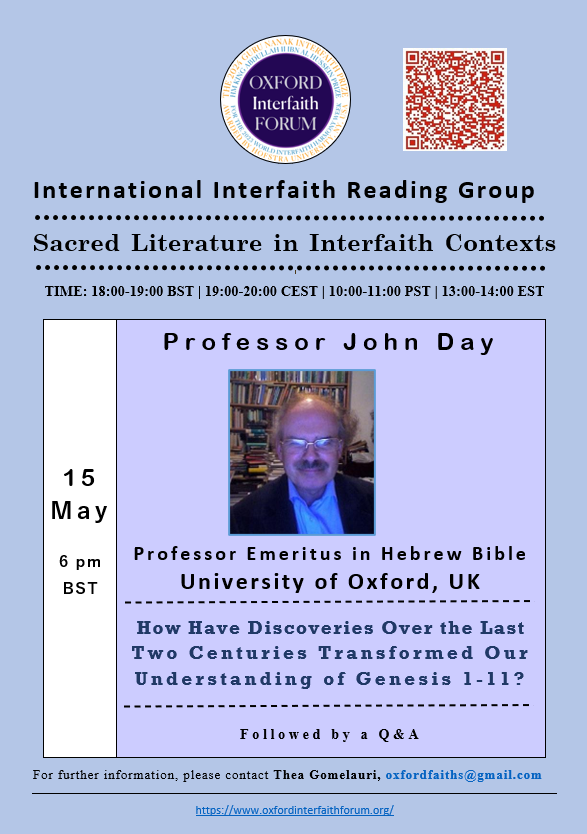
- How Have Discoveries Over the Last Two Centuries Transformed Our Understanding of Genesis 1-11?
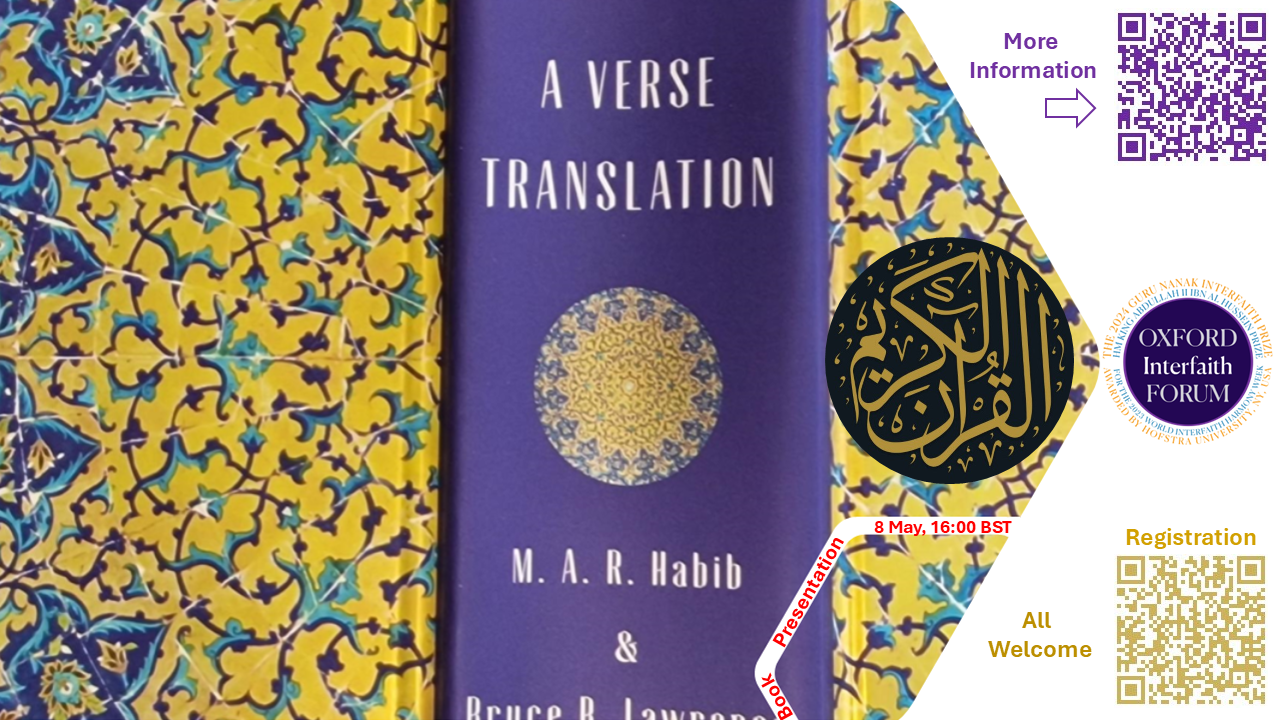
- Presentation of ‘The Qur’an: A Verse Translation’
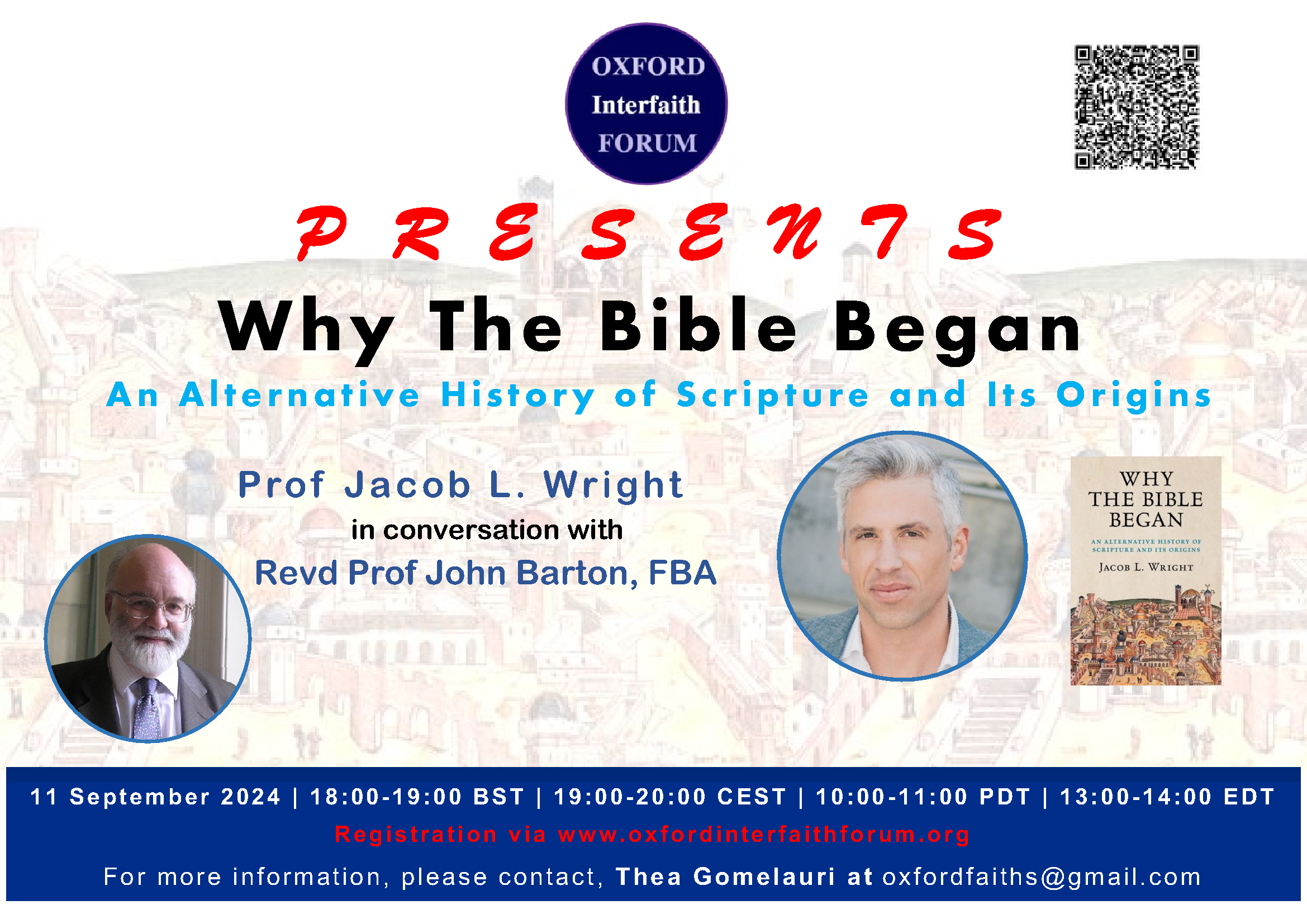
- Why The Bible Began: An Alternative History of Scripture and Its Origins
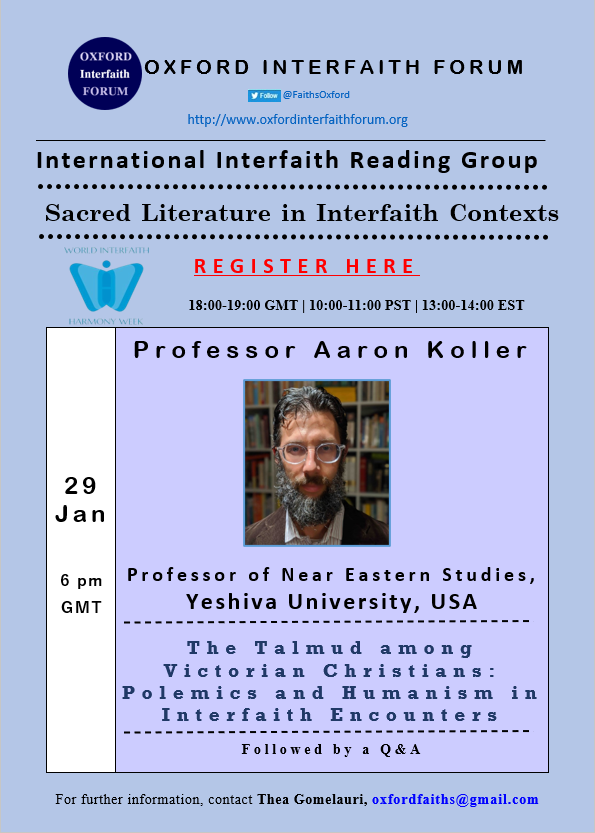
- The Talmud among Victorian Christians: Polemics and Humanism in Interfaith Encounters
- Seventy Languages (and Translations) for Seventy Nations
- Where does One Encounter the Divine? Dialogue Between the Sexes in the Talmud
- From the People of the Book to the Books of the People: Christian Literature and the 19th Century Ottoman Turkish Literary World
- How Christians Can Learn from the Devotional Poetry of Hindu South India
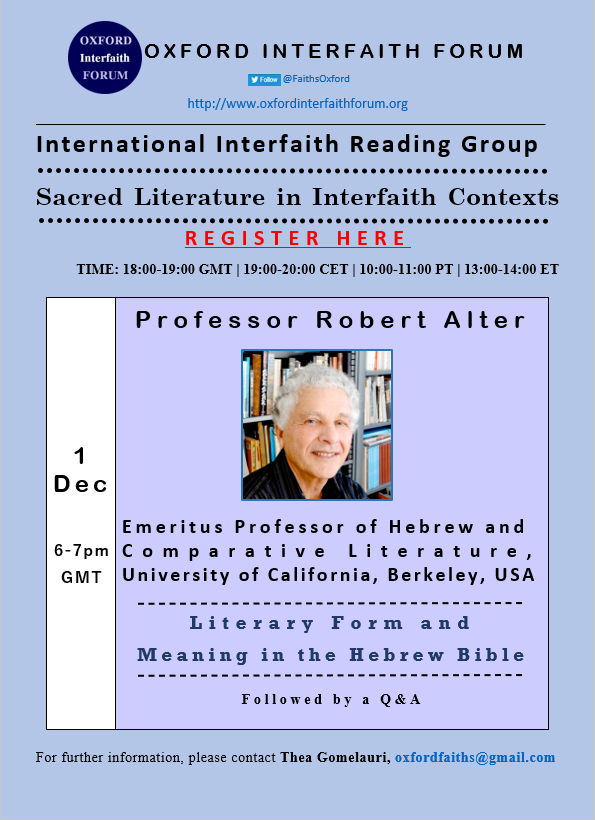
- Literary Form and Meaning in the Hebrew Bible
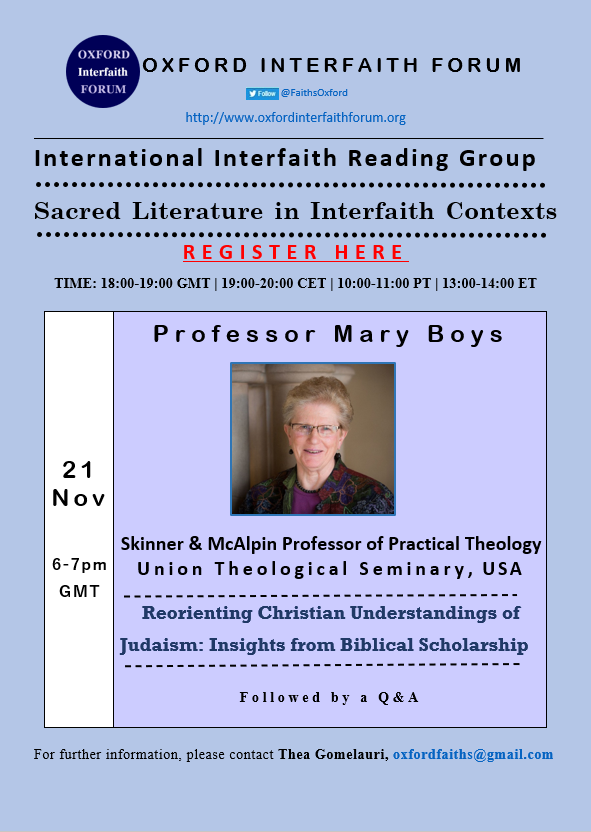
- Reorienting Christian Understandings of Judaism: Insights from Biblical Scholarship
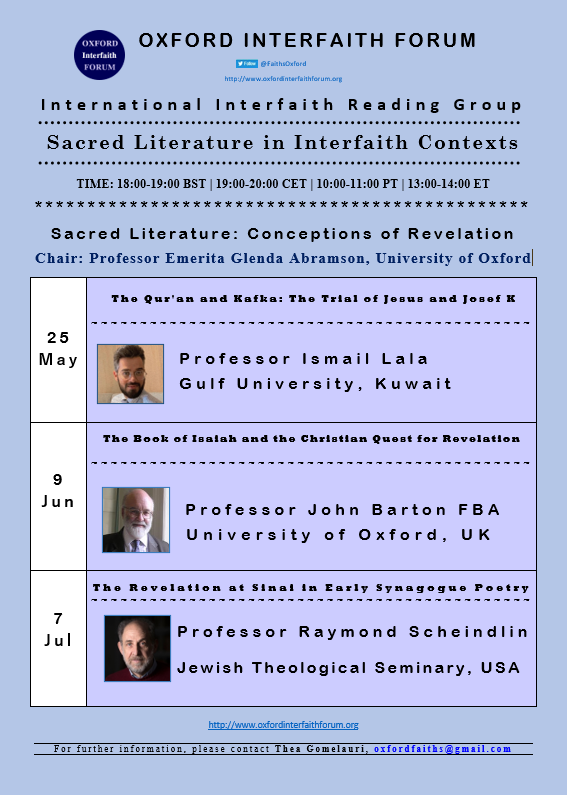
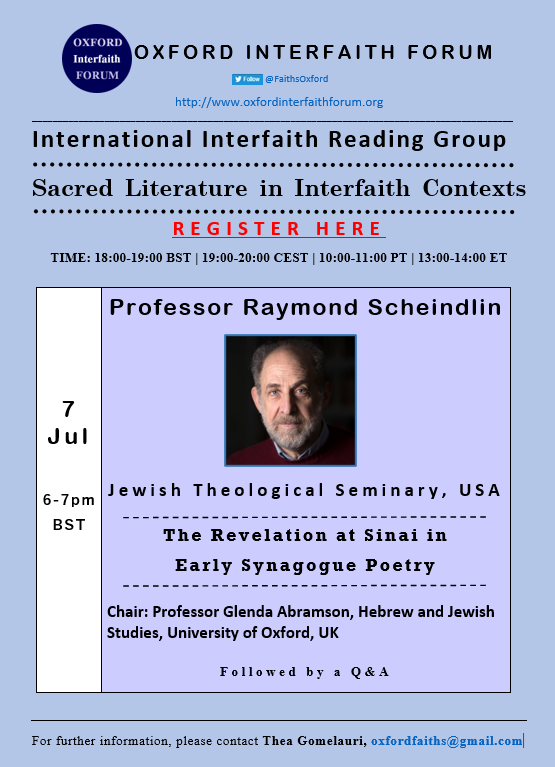
- The Revelation at Sinai in Early Synagogue Poetry
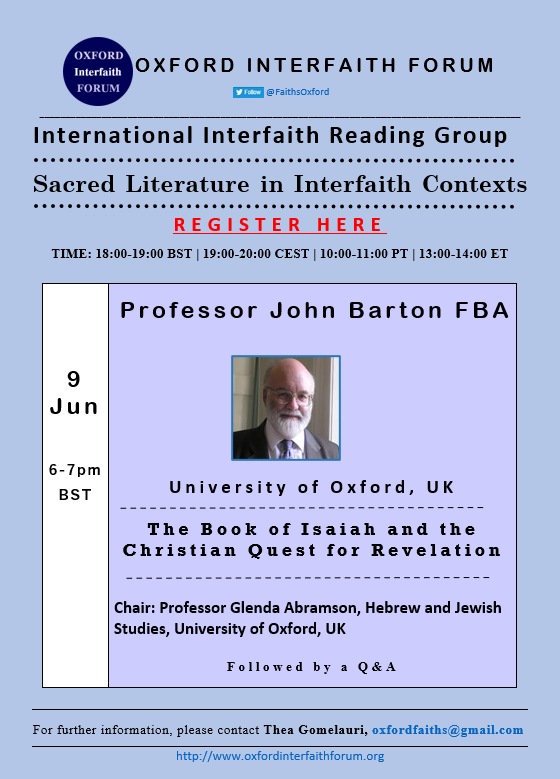
- The Book of Isaiah and the Christian Quest for Revelation
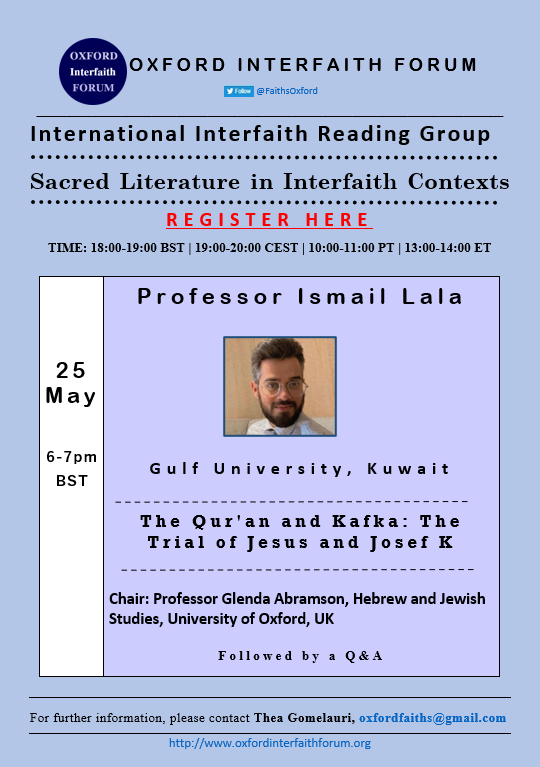
- The Qur’an and Kafka: The Trial of Jesus and Josef K
- Conceptions of Revelation in Interfaith Contexts