11 May, 2026
We are deeply honoured to welcome Dr Jaimee Comstock-Skipp, Leverhulme Early Career Fellow in the Faculty of Asian and Middle Eastern Studies, and Research Fellow at New College, University of Oxford, to lead a session of the Manuscripts in Interfaith Contexts Reading Group.
Or Scan the QR Code
Here are more details of this fascinating event.
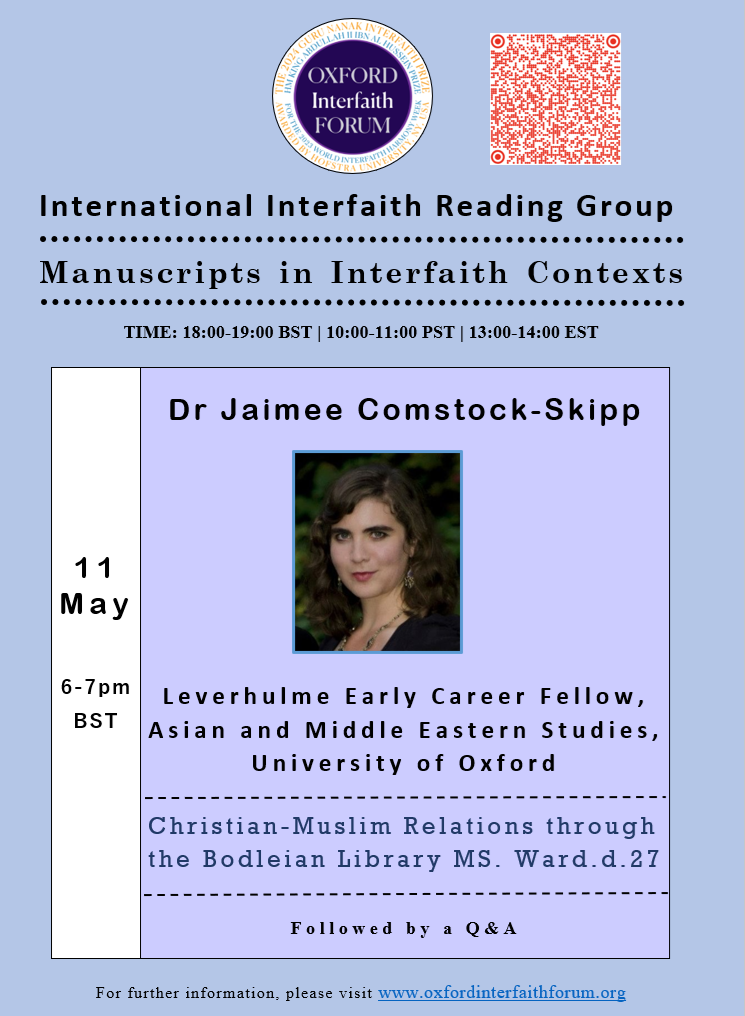
Abstract: What makes an illustration a ‘Persian miniature’? The paintings within a Georgian-language Vepkhistqaosani (Man in the Panther Skin) by Shota Rustaveli (c.1160 – c.1220) in the Bodleian Library MS Wardrop d.27 look ‘Persian’ and connect to Iran. The term ‘Persian’ can refer to the language of a manuscript containing illustrations or a geographic attribution where Persian was spoken or appreciated, but it more often functions as an elusive cultural and stylistic evocation deployed without proper explanation. The Bodleian manuscript permits a targeted investigation into specific artistic and political connections between Iran and Georgia in the late 16th through the 17th century. Its illustrations, posited to have been completed c.1650–1700, reflect a familiarity with artistic conventions and developments in the Safavid capital Isfahan, synthesised with elements from local workshops in or near Tbilisi. Whereas the qualifier ‘Persian’ is often taken as a given, the talk offers a case study in artistic and sartorial influence and diffusion between presumed original source material and later assimilation and deployment elsewhere. In addition to political co-mingling, numerous artists originally born in Georgia served in the Royal Safavid workshops. How long a style associated with one centre takes to transfer to another is an open question, as is whether the artists responsible for the Bodleian manuscript’s illustrations were personally trained in Safavid workshops, or whether forms and figures were transferred through circulating materials for Georgian artists to copy.
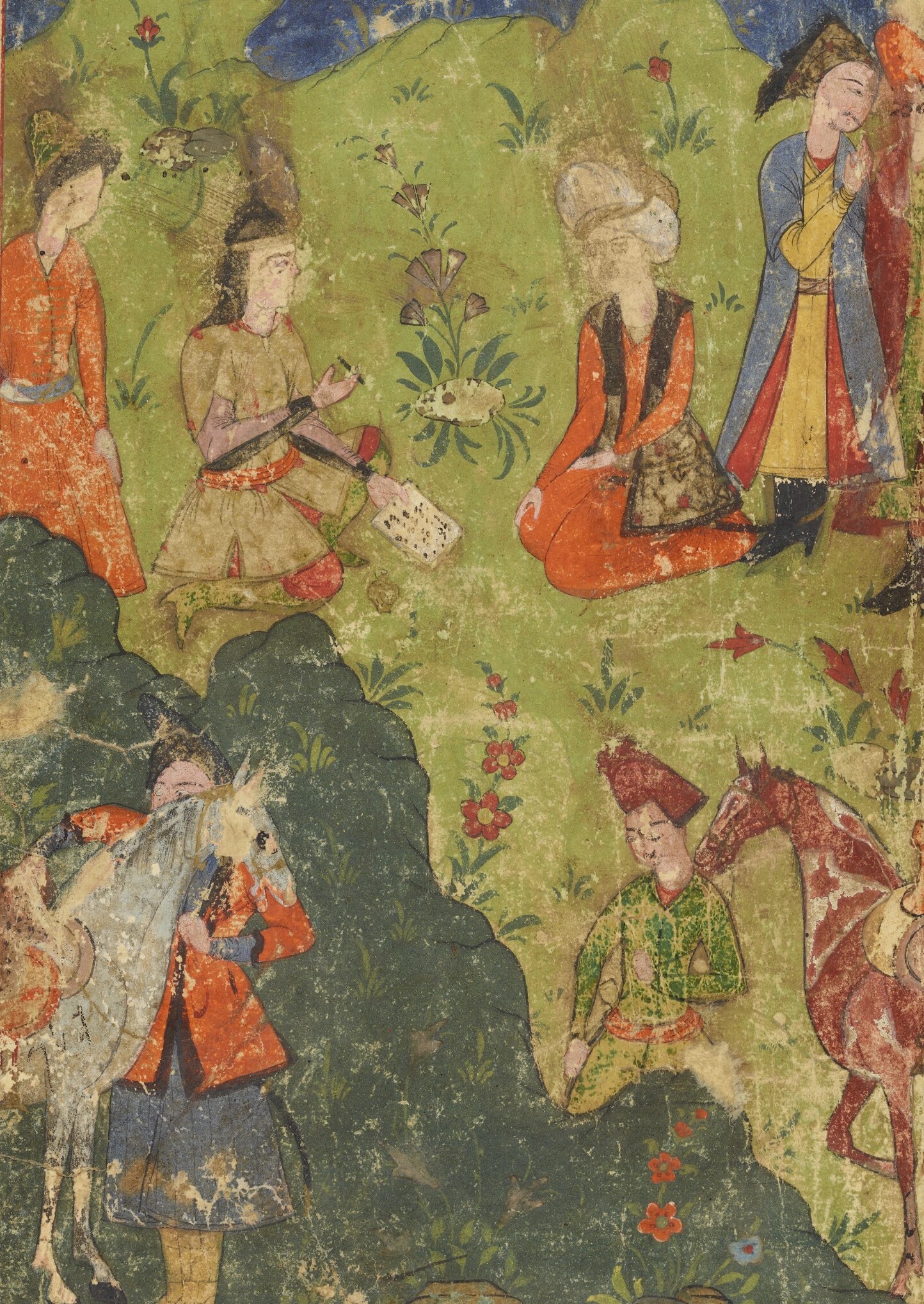
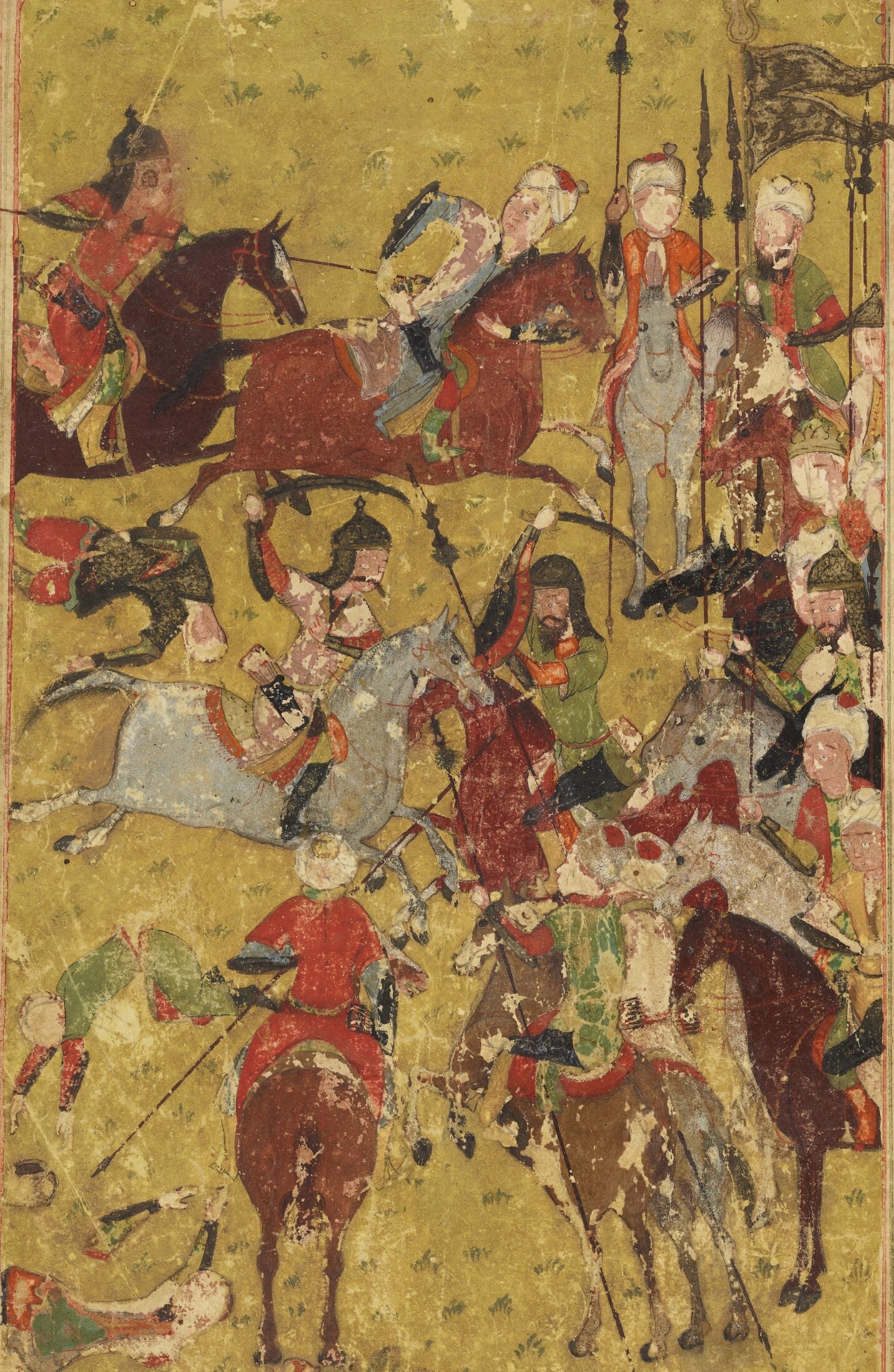
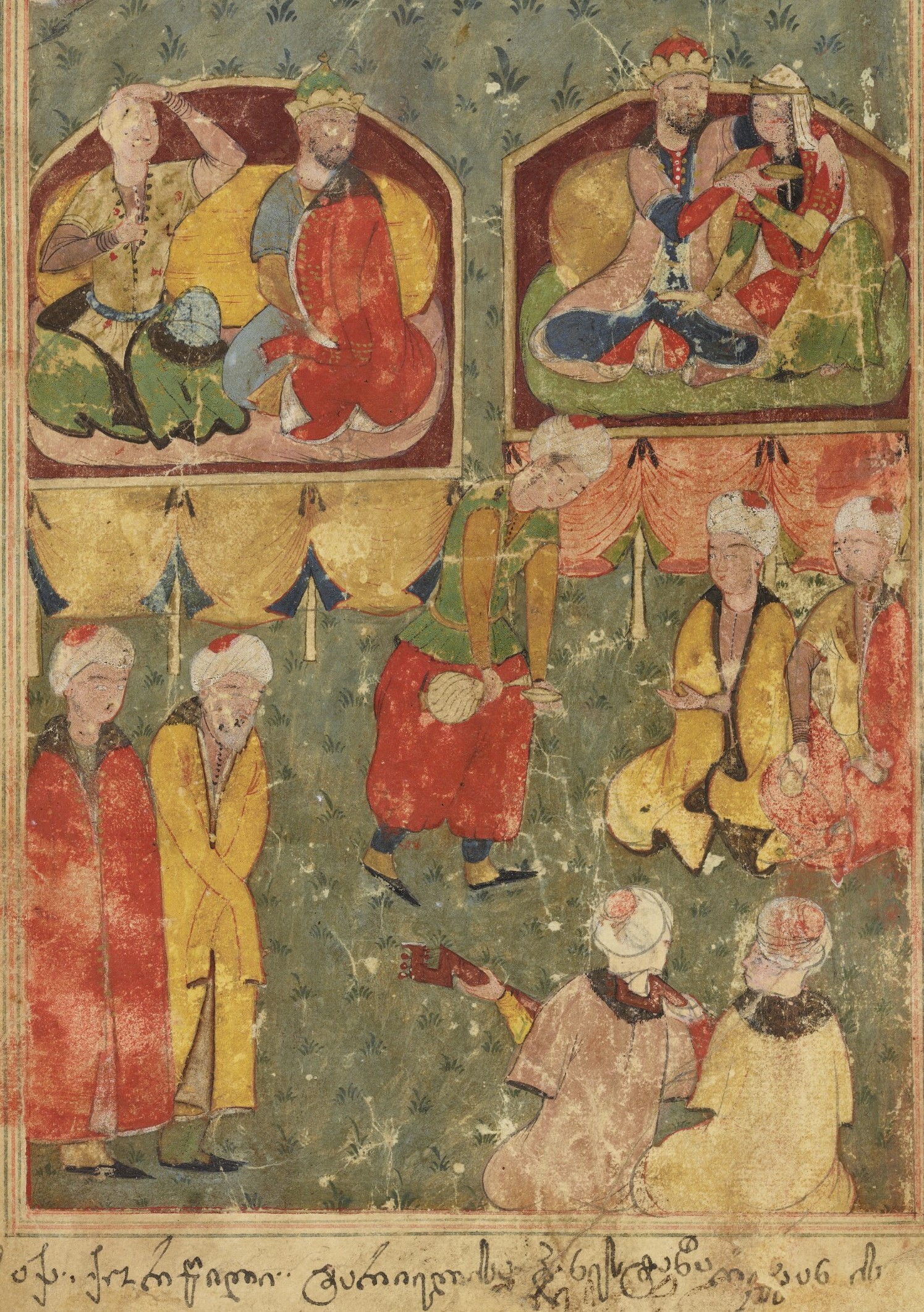
The manuscript images: fols. 55v, 78v, 151r. Courtesy of the Bodleian Library.
Speaker: Dr Jaimee Comstock-Skipp is a Leverhulme Early Career Fellow in the Faculty of Asian and Middle Eastern Studies, and a Research Fellow at New College, University of Oxford.
Speaker’s Biography: Dr Jaimee Comstock-Skipp holds a BA from the University of California, Berkeley, in Islamic civilisations and the Arabic and Persian languages. She obtained a first MA from the Williams College Graduate Program in the History of Art (Massachusetts, USA), and a second MA from The Courtauld Institute of Art (London, UK), where she studied Mongol through Safavid book arts predominantly from Iran. She completed her PhD at Leiden University’s Institute for Area Studies in Persian & Iranian Studies (2022), writing a dissertation on illustrated epic and biographical manuscripts of the Abu’l-Khayrids, and their diplomatic exchanges between courts within Central Asia and the broader Turco-Persianate sphere encompassing Safavids, Ottomans, and Mughals. She has held visiting fellowships at the Oxford Nizami Ganjavi Centre (Oxford, UK) and the Warburg Institute (London, UK).
Chair: Dr Shaahin Pishbin, Laming Junior Research Fellow at the Queen’s College, Department of Asian and Middle Eastern Studies at the University of Oxford.
Date: 11 May, 2026
Time: 18:00-19:00 BST | 10:00-11:00 PDT | 13:00-14:00 EDT
Venue: Online
Related Sessions
- Christian-Muslim Relations in the Bodleian Library Manuscript Wardrop d. 27
- The Greatest Medieval Masoretic Pentateuch: The Lailashi Codex—The Crown of Georgian Jewry

- A Curious Megillat Esther or How to Find a Needle in a Haystack
- The Dead Sea Scrolls and Jewish-Christian Dialogue
- Christian Images and Jewish Desecrators: The History of the Allegation in Manuscript Illustrations
- A Book for All Seasons: Medieval Liturgical Psalter
- A Medieval Franciscan Consults the Jews: Nicholas of Lyra on how to Imagine the Temple
- The Dead Sea Scrolls at 75: The Texts, Their Contexts, and the Coalescence of Jewish and Christian Scholarship
- British Library Hebrew Treasures Reveal Interfaith Narratives: The Sana’a Pentateuch
- Mandaeans: A Minority on the Move and their Manuscripts
- The Popes and the Jews in Sixteenth-Century Italy through the Chronicle of Pope Paul IV
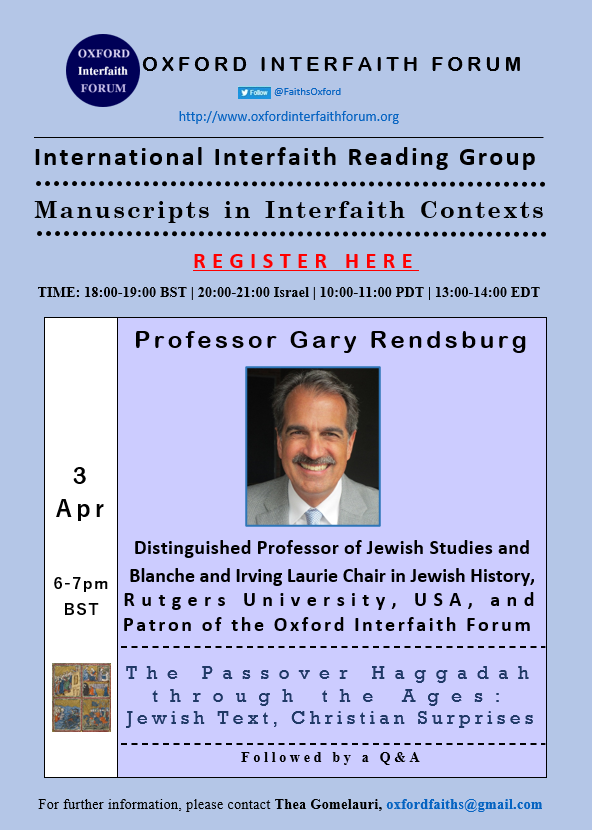
- The Passover Haggadah through the Ages: Jewish Text, Christian Surprises
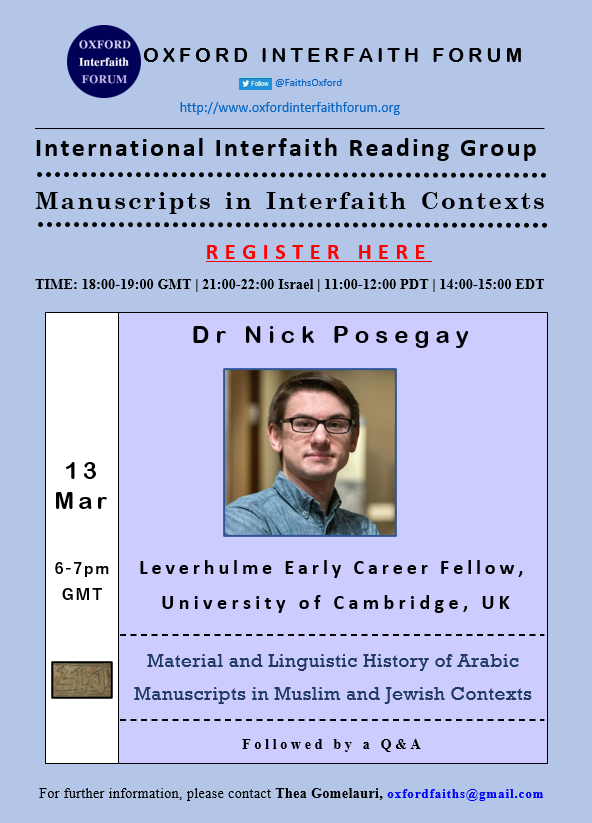
- Material and Linguistic History of Arabic Manuscripts in Muslim and Jewish Contexts
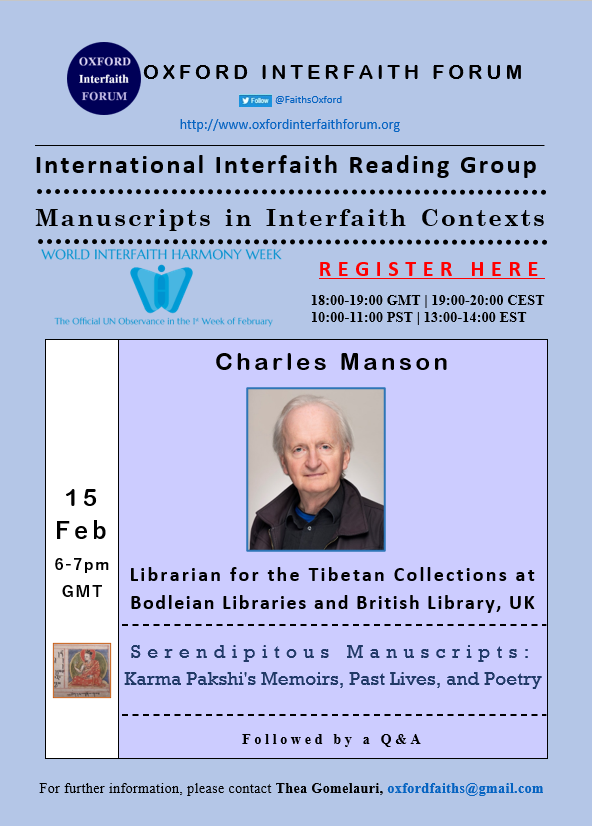
- Serendipitous Manuscripts: Karma Pakshi’s Memoirs, Past Lives, and Poetry
- The Kennicott Bible: The Greatest Bible Ever Written